

The tactic proved effective enough that later commanders trained elephants alongside swine to blunt their fear, a weakness noted by Roman and Byzantine authors from the wars against Pyrrhus to the defense of Edessa centuries later.
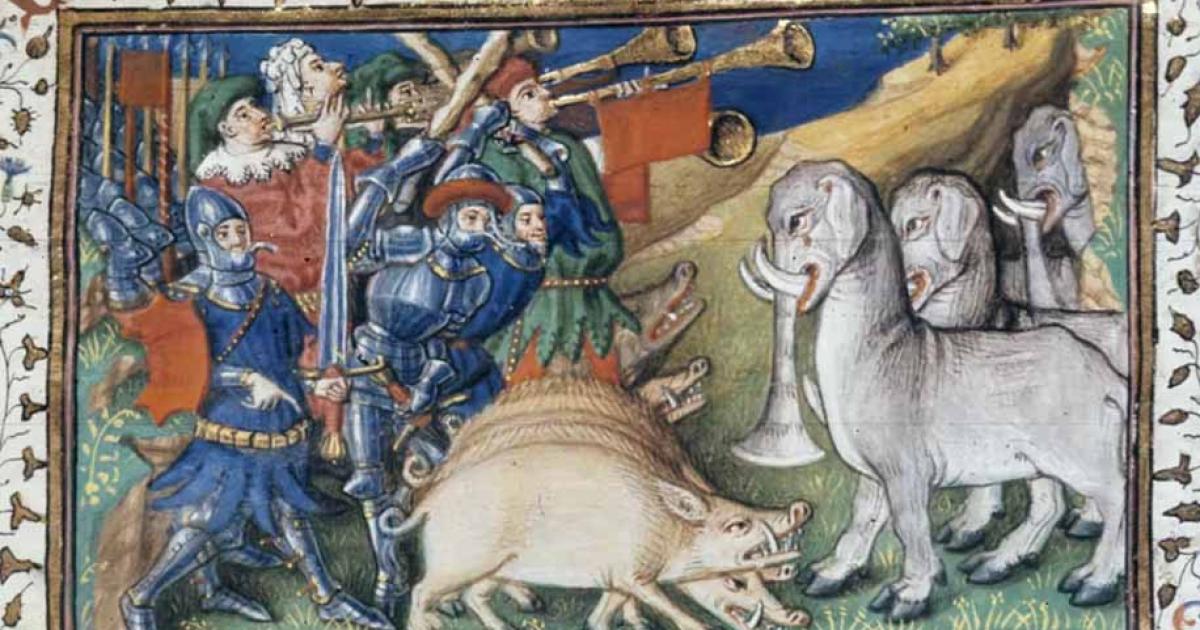
The idea of “war pigs,” especially flaming ones, owes much of its fame to the Alexander Romance, the medieval collection of legends that shaped how later generations imagined Alexander the Great. While often exaggerated, these stories are simply too vivid to ignore.

Historically, pigs played a crucial logistical role in Alexander’s campaigns. In preparation for the invasion of Asia in 334 BC, an estimated 70,000 black pigs were slaughtered, salted in the marshes of Cape Atherída near Pydna, and loaded onto triremes to provision an army of roughly 50,000 men.

Legend pushes pigs from supply lines to the battlefield itself. According to the Alexander Romance, Alexander learned from King Porus of India that war elephants were terrified by the high-pitched squealing of pigs. Some tales claim he exploited this fear to panic enemy elephants, causing chaos among opposing troops. While Alexander’s direct use of this tactic remains uncertain, later history confirms the idea: in 266 BC, during the siege of Megara, pigs were reportedly set ablaze and driven toward elephants to rout them, a strategy well known in Hellenistic and Roman warfare.


Nice read on a topic I was only familiar with through Total War or some other strategic PC wargame.
ReplyDeleteAre these 3D printed or did you source them from a specific minis manufacturer? Regardless, Love the contrast between their dark hides and the oil&flames on their backs. Poor oinkers. (Poor troops too - all that burning bacon on the battlefield must have left them feeling ravenous!)
Truth is sometimes stranger than fiction. Great work and interesting write up!
ReplyDelete